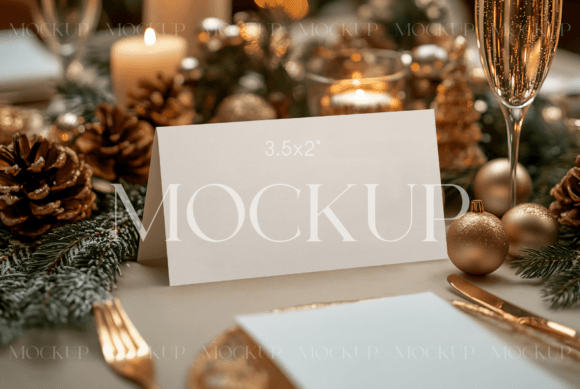
Place Card Mockup, Name Card Mock: Strategic Visualization for Wedding Design
The difference between a good design and a great one often lies not in the initial sketch, but in how that design is perceived by the end user. In the high-stakes world of wedding planning and stationery creation, perception is everything. A place card is more than just a piece of paper with a name on it; it is a tactile promise of the experience awaiting the guest. To bridge the gap between digital concept and physical reality, professionals rely on tools like the Place Card Mockup, Name Card Mock. This resource is not merely a template; it is a strategic instrument for validation, communication, and brand elevation.
For entrepreneurs, designers, and wedding planners, the ability to present work accurately is a critical component of client trust. The Wedding Place Card Mockup described here serves as an ideal tool for elegantly presenting your wedding place card designs in a realistic and stylish setting. By utilizing this mockup, you move beyond abstract descriptions and allow clients to visualize the tangible outcome. This article explores how thoughtful integration of such visual assets can streamline operations, enhance customer experience, and secure long-term professional success.
The Strategic Value of Realistic Visualization
In the creative industry, there is often a disconnect between what a designer sees on a screen and what a client imagines in their mind’s eye. Textures, lighting, typography weight, and spatial arrangement are difficult to convey through flat JPEGs or verbal descriptions alone. This is where the practical utility of a high-fidelity Name Card Mock becomes apparent. It acts as a translator, converting digital specifications into a relatable context.
When you showcase delicate fonts, intricate patterns, and personalized details within a realistic setting, you reduce cognitive load for the client. They do not have to guess how the gold foil will catch the light or whether the cream-colored stock will feel premium. Instead, they see it. This clarity accelerates decision-making. Clients approve concepts faster when they can "see" the final product, reducing the number of revision rounds and saving valuable time during the project lifecycle.
Furthermore, using a sophisticated mockup enhances your own branding. It signals professionalism and attention to detail. When a potential client views your portfolio or presentation deck, the quality of your presentation reflects the quality of your service. A poorly rendered image suggests a lack of care, while a polished, realistic mockup implies precision and expertise.
Enhancing Communication Across Themes
Weddings are diverse events, each carrying a unique aesthetic narrative. Whether you’re designing for a classic, modern, or rustic theme, the context in which your design is presented must align with that narrative. The flexibility of the Place Card Mockup allows you to tailor the presentation to fit these varying styles seamlessly.
- Classic Elegance: For traditional weddings, the mockup can highlight serif fonts and formal layouts against backgrounds of linen textures or marble surfaces. This reinforces the sense of timelessness and sophistication.
- Modern Minimalism: For contemporary designs, clean lines and ample whitespace can be emphasized by placing the cards on sleek, neutral backdrops. This draws attention to the typography and structural integrity of the design.
- Rustic Charm: For nature-inspired themes, incorporating elements like wood grain, dried flowers, or soft natural lighting in the mockup presentation can evoke warmth and organic beauty.
By adapting the presentation environment, you ensure that the Place Card Mockup, Name Card Mock does not distract from the design itself but rather amplifies its intended emotional impact. This strategic alignment helps clients connect emotionally with their choices, leading to higher satisfaction rates.
Operational Efficiency and Workflow Integration
Beyond aesthetics, the technical aspects of this tool offer significant operational benefits. The inclusion of a PSD mockup file with a smart object feature is a game-changer for productivity. Smart objects allow designers to update their designs instantly without manually repositioning layers or adjusting shadows. This efficiency is crucial for freelancers and small business owners who manage multiple projects simultaneously.
- Rapid Prototyping: Test multiple font pairings or color schemes in minutes rather than hours. This encourages experimentation and creativity without penalizing the workflow.
- Client Presentations: Generate high-resolution 300 DPI JPG files quickly for email attachments or online portfolios. The high resolution ensures that even when zoomed in, the details remain crisp and professional.
- Consistency: Use the same base mockup structure across different projects to maintain a consistent brand voice in your presentations. Consistency builds recognition and trust.
This streamlined process allows you to focus less on the mechanics of rendering and more on the strategic decisions regarding layout, hierarchy, and client needs. It transforms the mockup from a static image generator into a dynamic part of your production pipeline.
Decision-Making and Risk Mitigation
While the benefits are clear, relying on mockups requires intentional usage. A common pitfall is assuming that a mockup is a perfect substitute for a physical proof. While excellent for visualization, a digital representation cannot fully replicate the weight of the paper, the texture of the embossing, or the exact shade of ink under specific lighting conditions.
To mitigate risks, use the Place Card Mockup, Name Card Mock as a primary communication tool, but always complement it with physical samples for final approvals. This hybrid approach provides the best of both worlds: the speed and flexibility of digital review, followed by the tactile certainty of physical inspection. This is particularly important for complex finishes like foil stamping, letterpress, or die-cutting, where the interplay of light and shadow is critical.
Additionally, consider the context of your audience. If your client is highly visual, the mockup may suffice for early-stage approvals. However, if they are detail-oriented or anxious about perfection, providing physical proofs alongside digital mockups demonstrates thoroughness and care. This proactive approach to risk management strengthens client relationships and reduces the likelihood of post-production disputes.
Long-Term Brand Building Through Quality Assets
Investing in high-quality resources like the Wedding Place Card Mockup is an investment in your long-term brand equity. Every time you use this tool, you are reinforcing your position as a serious player in the market. Over time, this consistency accumulates. Clients remember the clarity of your presentations, the ease of your workflow, and the professionalism of your deliverables.
Moreover, sharing your use of professional tools on social media or in case studies can attract similar-minded clients. Demonstrating that you use industry-standard practices signals that you value quality and efficiency. This can lead to referrals and repeat business, as satisfied clients appreciate working with professionals who prioritize their vision and time.
For educators and mentors in the design field, showcasing the proper use of mockups also serves as a teaching moment. It illustrates the importance of presentation skills and the value of understanding the entire production process, from concept to print. This holistic view prepares the next generation of designers to handle real-world challenges with confidence.
Practical Considerations for Implementation
Before integrating this tool into your routine, evaluate your current workflow. Are you spending too much time on manual adjustments? Do your clients frequently misunderstand your design intent? If so, the Place Card Mockup, Name Card Mock offers a targeted solution. Start by creating a library of variations—different angles, lighting setups, and background textures—to suit various project types.
Ensure that your source files are organized and labeled correctly. The ease of use depends heavily on the clarity of your layer structure. Take the time to refine your templates, ensuring that the smart objects behave predictably. This upfront effort pays dividends in reduced frustration and increased output quality over time.
Finally, gather feedback. After using the mockup in client meetings, ask for their impressions. Did it help them understand the design better? Were there any discrepancies between their expectation and the final print? Use this feedback to refine your approach continuously. The goal is not just to use the tool, but to master it in a way that serves your specific business goals.
Conclusion
The Place Card Mockup, Name Card Mock is more than a convenience; it is a strategic asset for anyone involved in wedding design and stationery creation. By enabling realistic visualization, enhancing communication, streamlining workflows, and supporting brand building, it contributes significantly to better decision-making and improved outcomes. Used intentionally and complemented by physical proofs, this tool helps professionals deliver exceptional results, foster client trust, and achieve sustainable growth in a competitive market.
Thank you for browsing TatiMockups ⚡️ What you’ll receive includes a PSD mockup file with a smart object and a high-resolution 300 DPI JPG file, providing everything you need to elevate your presentations and secure your next project.