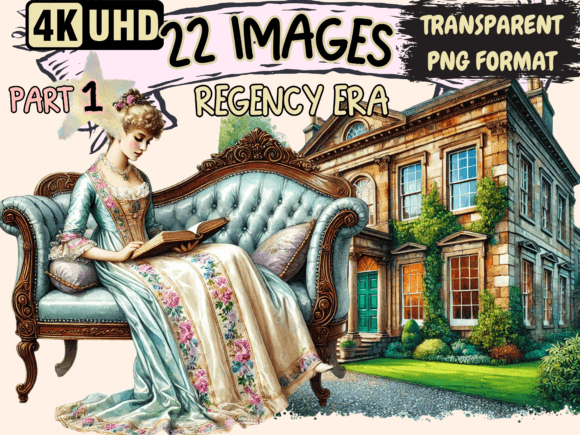
Regency Era Clipart P1: A Comprehensive Guide to Historical Digital Assets for Modern Design
In the contemporary landscape of digital design, historical aesthetics offer a unique avenue for creating content that feels both timeless and sophisticated. Among the various periods that capture the public imagination, the Regency era—spanning roughly from 1811 to 1820 in Britain, though often extending culturally through the 1830s—stands out for its distinctive blend of neoclassical simplicity and romantic elegance. For designers, educators, and content creators seeking to evoke this specific atmosphere, Regency Era Clipart P1 represents a curated collection of high-quality visual assets designed to facilitate authentic and engaging creative projects.
This article explores the utility, aesthetic characteristics, and practical applications of using Regency-era digital illustrations. By understanding the nuances of this historical period and how modern clipart bridges the gap between archival history and digital convenience, users can effectively integrate these elements into invitations, educational materials, social media campaigns, and commercial products.
The Aesthetic Appeal of the Regency Period
To appreciate the value of Regency Era Clipart P1, it is essential to first understand what defines the visual identity of the era. The Regency style is heavily influenced by the Neoclassical movement, which looked back to the art and architecture of ancient Greece and Rome. This resulted in fashion and design that favored clean lines, high waistlines, and flowing fabrics over the ornate excesses of the preceding Georgian period.
Key visual markers include:
- Fashion Silhouettes: Women’s attire featured empire-waist gowns made of lightweight muslin or silk, often adorned with delicate floral patterns. Men’s fashion was characterized by tailored tailcoats, breeches or trousers, cravats, and top hats.
- Architectural Elements: Stately manors, colonnades, and elegant ballrooms serve as common backdrops, reflecting the wealth and social structure of the time.
- Social Iconography: Horse-drawn carriages, tea sets, quill pens, and formal dance poses are ubiquitous symbols of Regency life.
Clipart collections like Regency Era Clipart P1 capture these details with precision. By utilizing transparent PNG graphics, designers can overlay these historically accurate figures and objects onto any background without being constrained by rigid rectangular borders. This flexibility allows for seamless integration into complex compositions, ensuring that the final output looks professional and cohesive rather than pasted together.
Technical Advantages of Transparent PNG Graphics
The specification of "highest-quality transparent no background PNG graphics" in Regency Era Clipart P1 is not merely a technical detail; it is a critical feature for professional workflow efficiency. Unlike JPEG images, which have solid backgrounds that must be manually removed using editing software, PNG files with transparency come ready for use. This saves significant time and reduces the risk of errors associated with masking tools.
For professionals working under tight deadlines, such as graphic designers preparing last-minute event materials or marketers launching a seasonal campaign, the ability to drag-and-drop elements directly into design software like Adobe Photoshop, Canva, or Microsoft PowerPoint is invaluable. Furthermore, the high resolution typical of premium clipart ensures that images remain crisp when scaled up for print materials, such as large-format banners or wedding invitations, without pixelation.
Practical Applications Across Industries
The versatility of Regency-themed digital assets extends far beyond simple decoration. Different sectors can leverage Regency Era Clipart P1 to enhance their communication strategies in distinct ways.
Event Planning and Stationery
One of the most prominent uses of this clipart is in the realm of weddings and special events. There has been a sustained trend toward "Bridgerton-inspired" or Jane Austen-themed weddings. Couples and event planners utilize these graphics to create:
- Invitations and Save-the-Dates: Elegant borders featuring lace-like floral patterns and silhouettes of couples dancing set the tone before the guest even arrives.
- Table Numbers and Place Cards: Small, detailed icons of carriages or teacups add a whimsical yet refined touch to table settings.
- Wedding Favors: Labels for honey jars or cookies can feature classic Regency motifs to tie the entire theme together.
Similarly, for corporate retreats or themed galas, organizations can use these assets to create branded merchandise or presentation slides that convey a sense of luxury and tradition.
Educational Materials and Publishing
Educators and authors find immense value in visual aids that bring history to life. When teaching literature classes focused on Charles Dickens, Jane Austen, or the Brontë sisters, static text can sometimes fail to engage students. Incorporating Regency Era Clipart P1 into worksheets, slide presentations, or e-books helps visualize the setting.
For instance, a history lesson on the Napoleonic Wars might benefit from illustrations of military uniforms or naval scenes available in such collections. In children’s publishing, colorful and simplified versions of Regency characters can make historical fiction more accessible to younger readers, bridging the gap between abstract dates and tangible human experiences.
Digital Marketing and Social Media
In the digital space, visual content drives engagement. Brands selling vintage-style clothing, antique furniture, or even romance novels can use Regency clipart to create eye-catching social media posts. A bakery promoting a "High Tea" menu could use images of delicate porcelain and tiered cakes to entice customers. The key here is consistency; using a recognizable visual language helps build brand identity.
Moreover, bloggers and influencers writing about historical fashion trends can use these graphics as headers or bullet points to break up text, making long-form articles more readable and visually appealing. The inclusion of elements like 🧸🍓 (stuffed animals or fruits) alongside traditional Regency items can also suggest a playful, modern twist on the classic aesthetic, appealing to a broader, younger demographic.
Considerations for Ethical and Effective Use
While the benefits of using digital clipart are clear, there are important considerations regarding licensing and ethical usage. Creators must ensure they have the appropriate rights to use Regency Era Clipart P1 for their intended purpose. Most premium bundles allow for personal and commercial use, but some may restrict resale as standalone digital files. It is crucial to read the license agreement carefully.
Additionally, authenticity matters. While clipart provides convenience, it should complement rather than replace deep research. When designing educational content, accuracy in depicting historical details—such as the correct type of carriage for a specific year or the appropriate attire for different social classes—is vital. Using high-quality sources like Regency Era Clipart P1 supports this goal by providing well-researched illustrations that respect the historical context.
Another consideration is cultural sensitivity. The Regency era was a time of significant social stratification and colonialism. Designers should be mindful of how they present these images, avoiding stereotypes or contexts that might trivialize the struggles of the lower classes during this period. Instead, focusing on the artistic and cultural achievements of the era fosters a more respectful and enriching user experience.
Integrating Clipart into Modern Workflows
Integrating historical clipart into modern design workflows requires a strategic approach. Here are several steps to maximize the potential of Regency Era Clipart P1:
- Curate a Palette: Select colors that complement the neutral tones often found in Regency fashion (whites, creams, pastels). Earthy greens, deep blues, and gold accents work well to highlight the elegance of the graphics.
- Layering Techniques: Use the transparent backgrounds to layer images. For example, place a floral pattern behind a silhouette of a lady in a ballgown to add depth without cluttering the design.
- Typography Pairing: Choose fonts that match the era. Serif fonts with high contrast, reminiscent of 19th-century printing presses, pair beautifully with Regency imagery. Avoid overly modern sans-serif fonts unless aiming for a deliberate juxtaposition.
- Consistent Sizing: Maintain consistent scale across all elements. A tiny carriage next to a giant hat can look disjointed. Adjust sizes to reflect realistic proportions relative to each other.
Conclusion
The demand for content that evokes nostalgia, elegance, and sophistication continues to grow. Regency Era Clipart P1 offers a robust solution for creators looking to tap into this aesthetic. By providing high-quality, versatile, and historically inspired graphics, this bundle empowers users to transform ordinary projects into extraordinary experiences.
Whether you are crafting a heartfelt wedding invitation, developing an engaging history lesson, or building a brand identity rooted in tradition, the right visual assets make all the difference. Embracing the grace and refinement of the Regency era through digital means allows us to keep the spirit of that beautiful period alive in our modern world. As technology evolves, so too does our ability to preserve and share history, and clipart serves as a bridge connecting the past’s beauty with the future’s creativity.
For those ready to elevate their designs, exploring comprehensive collections like Regency Era Clipart P1 is a step toward achieving a level of polish and authenticity that resonates with audiences. By combining technical proficiency with a love for historical detail, creators can produce work that is not only visually stunning but also culturally rich and meaningful.